Maimonides and Aristotle: Virtue or Virtual?







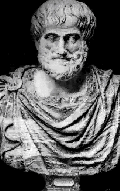 Aristotle says "To think." |
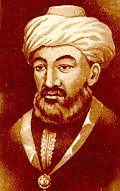 Maimonides says "To pray." |
Moses Maimonides (Rambam) in his "Guide for the Perplexed" states that the classical Greek philosopher Aristotle reached the highest level of understanding a human being can reach short of prophecy, and calls him the greatest of philosophers. Yet, Maimonides refutes many of Aristotle's basic tenets of philosophical speculation, especially his postulations regarding man's duty in the world.
Where did Aristotle fall short to the extent that he, the greatest of philosophers, did not attain the wisdom of prophecy, a wisdom which even the simplest of our ancestors achieved at Mount Sinai?
Aristotle reasons that the "virtue" of a creature is to be found in its fulfilling its natural function. Thus, a bird could be called virtuous in flying, a fish in swimming, and a lion in killing a zebra.
What is the virtue of man? Aristotle suggests that since that which is distinctly human is the capacity for rational thought, it follows that man's highest nature is to be found in the realm of the mind. The highest ability of the human mind is the ability to think. Therefore contemplation, the activity of the mind, is the source of man's highest joy. Aristotle concludes that the virtue of man, the fulfillment of his natural inclination, is to philosophize (not a surprising conclusion for a philosopher!).
A "thinking being" can create incredible inventions enabling man to communicate between continents, prolong life-expectancy, and most remarkably, explore the far-reaches of space. It also enables man to abuse the environment, extinguish entire species, and most regrettably, develop weapons capable of annihilating millions in an instant.
According to Maimonides, however, the virtue of man is to cling to his Creator. In other words, man is a "praying being."
Aristotle's "thinking being" strives to rule the world through subjugation and domination. Maimonides' "praying being" has a much greater potential to be the true "king" of this world by elevating the world. If man abides by the will of his Creator - the King of kings - he is capable of more than mere thought; he is capable of prayer. This prayer binds him to his Creator to make him a full partner in building a world of truth and beauty.


